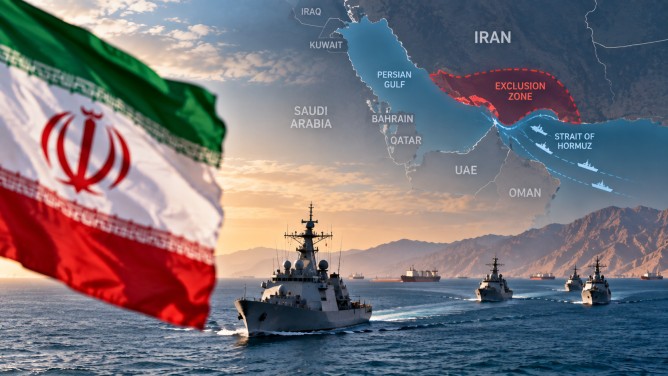
Iran has announced plans to create a new “exclusion zone” near the Strait of Hormuz, a crucial maritime passage for global oil and gas transport. Mohsen Rezaei, who now leads Iran’s Supreme National Security Council, stated that this zone would stretch from the area of the U.S. naval blockade towards the Strait of Hormuz and further into the Arabian Gulf. The initiative targets vessels that Iran suspects of attempting to transit through the strategic strait, with the potential for these ships to be added to an Iranian sanctions list if identified.
This development comes in the wake of heightened tensions marked by a U.S. military strike on three Iranian oil tankers, following Iran’s ballistic missile attack on U.S. warships. Additionally, Iran claimed responsibility for striking an unmanned U.S. vessel trying to enter the strait, though the U.S. military has refuted this assertion. The Strait of Hormuz continues to be a vital channel for energy supplies worldwide, and any disruptions could significantly impact global energy prices and the broader economy.
The United States has bolstered its naval presence to enforce a blockade on Iranian ports, aiming to curb Tehran’s oil exports. In tandem, Washington has intensified economic pressure on Iran after diplomatic negotiations between the two nations fell through. Despite the deteriorating relations, U.S. officials affirm that substantial amounts of oil are still moving through the Strait of Hormuz, facilitated by naval escorts and alternative pipelines in the region.
Rezaei emphasized Iran’s commitment to maintaining diplomatic efforts but stressed the need for stronger assurances in any forthcoming agreements. Talks between Tehran and Washington have reached an impasse, with both countries accusing each other of breaching previous commitments. Nevertheless, the ongoing passage of oil through the strait suggests that, for now, the channel remains open under vigilant protection.